- Calendar
- Friday 26 June 2026
- Clock
- 11:00–12:00
- Navigate
-
Room 2.35
- Microphone
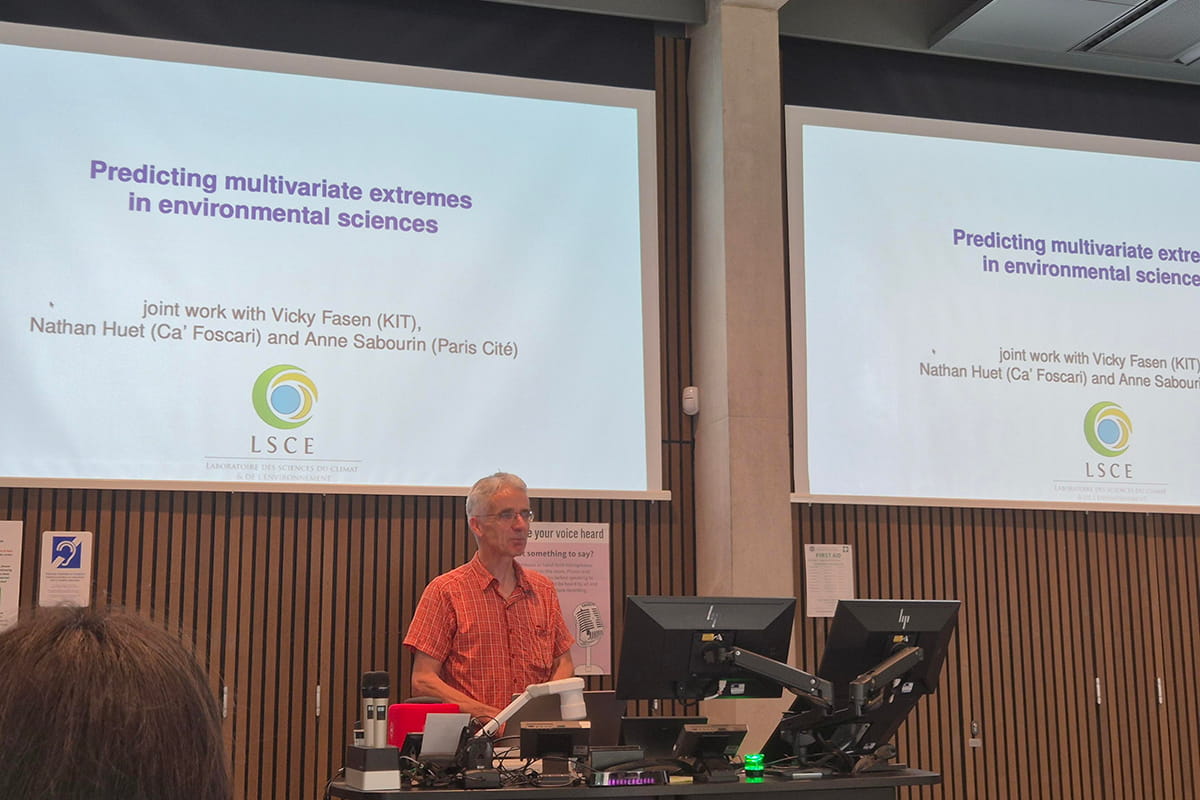
- Dr Philippe Naveau
Overview
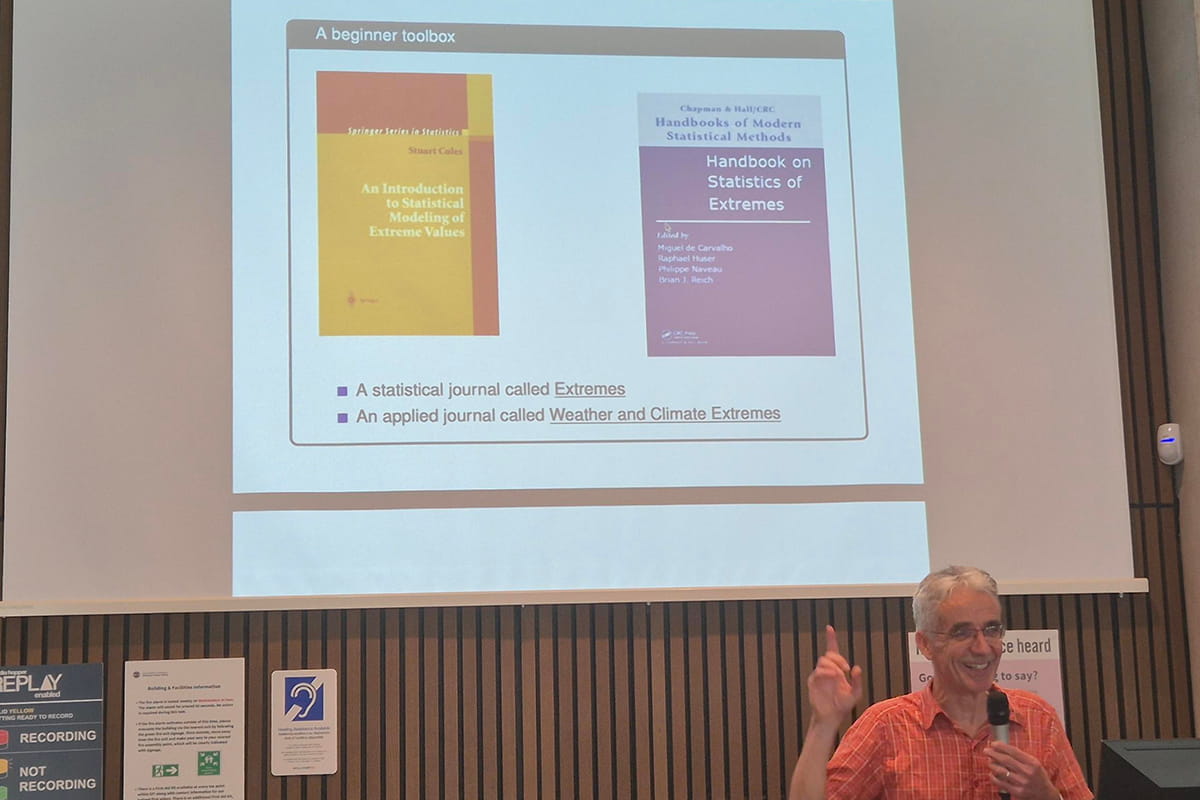
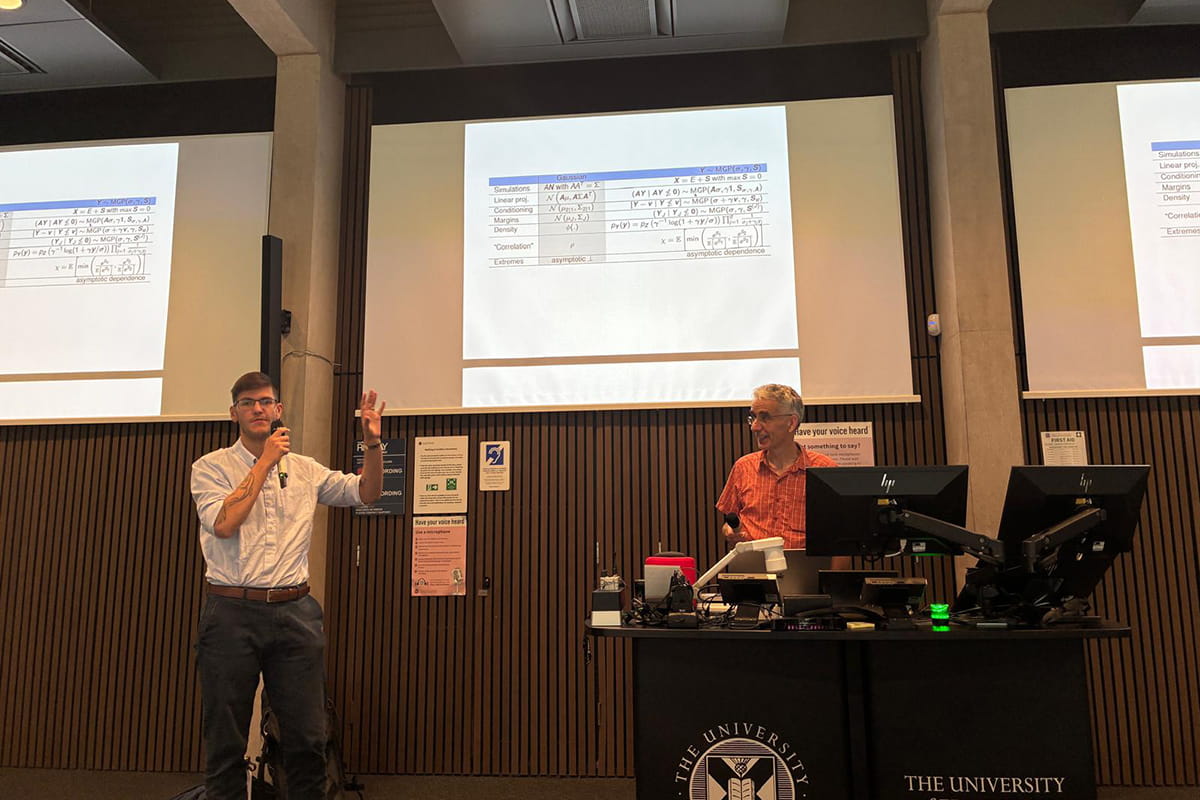
The seminar brought together researchers from across the University to explore recent advances in statistical modeling and prediction of multivariate extreme events. The seminar generated an engaging discussion on the broader applications of regression methods for extremes, with potential relevance across finance, environmental sciences, life and social sciences, and other disciplines.
Abstract
In machine learning and statistics, predicting is a key goal, especially within a regression framework. In particular, regression is taught in all introductory courses in statistics and it has been applied to most known research fields. The popularity of linear regressions is due to the simplicity of the problem at hand and the elegant properties of the solution. Today, as the frequency and/or intensity of extreme events are generally increasing in environmental sciences, there is a need to focus on predicting extremes in linear regression setups tailored for extremes.
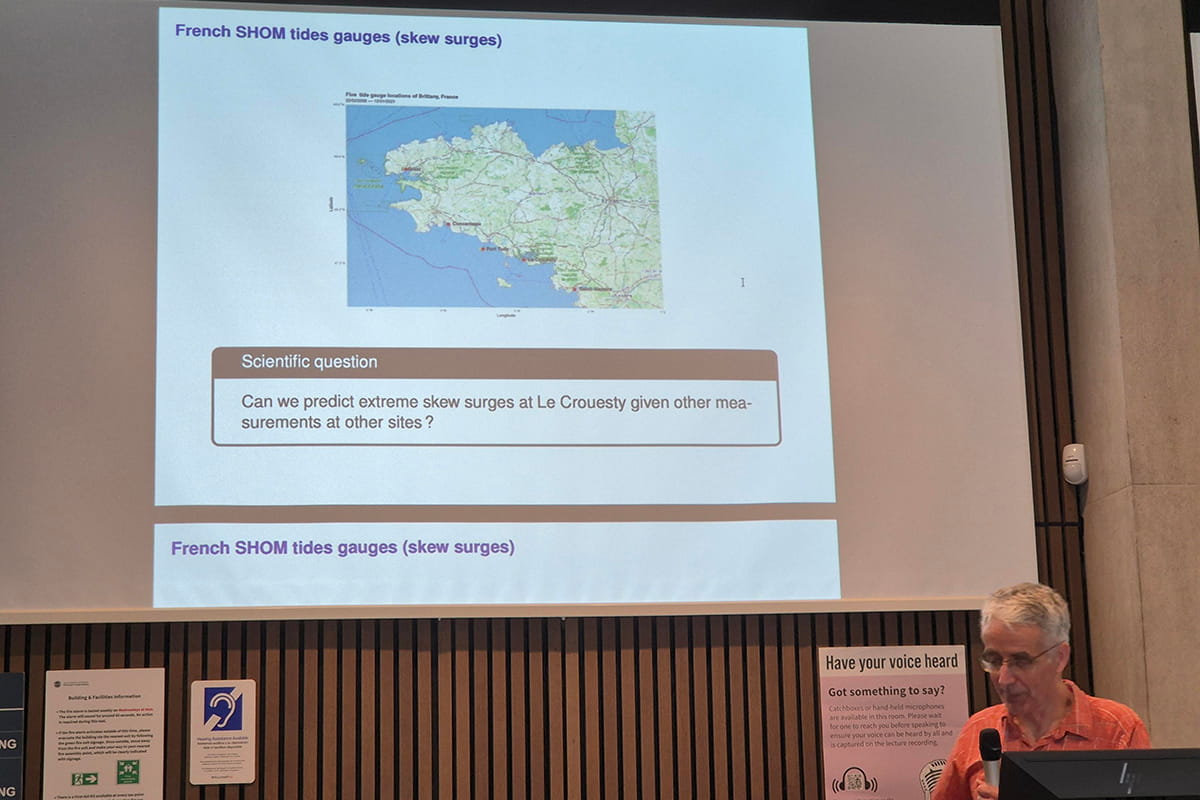
This talk leveraged the field of multivariate extreme value theory to propose a simple framework to find the optimal regression parameters for predicting multivariate events. A few mathematical properties were discussed. A simple algorithm was explained and tested on simulated data. In addition, a comparison with competing approaches was presented in the context of reconstructing past skew surges along the French coast (Huet et al, 2026). This work was conducted jointly with Vicky Fasen, Nathan Huet, and Anne Sabourin.
Speaker Bio
Philippe Naveau is a senior research scientist (CNRS) at the “Laboratoire des Sciences du Climat et de l’Environnement”, near Paris. He graduated from Colorado State University, Department of Statistics, in 1998. His main areas of research are statistical climatology and hydrology, with a methodological focus on extreme value theory, time series analysis and spatial statistics.