
Eduardo Adame
Olá! My name is Eduardo Adame, and I'm a PhD student in the School of Mathematics at the University of Edinburgh, Maxwell Institute for Mathematical Sciences, supervised by Jordan Richards and Miguel de Carvalho and fully funded by a School of Mathematics studentship. I hold a master's degree in applied mathematics and data science from FGV EMAp (Rio de Janeiro). My work sits at the intersection of Bayesian methods, generative models and statistics of extremes.
My PhD research focuses on predictive inference for sequential extreme events, using approaches such as transformer-based trajectory models to characterise and forecast extreme occurrences over time. This builds on a broader background spanning Bayesian generative modelling and statistics of extremes.
During my master's, I developed exact computation methods for the Normalised Power Prior, and separately, I contributed to work on uncertainty quantification for generative image restoration using conformal prediction. I have also worked on applied research and development projects with Brazil's Ministry of Finance (CARF), evaluating and statistically validating legal data systems, and on a geospatial counterfactual analysis for the World Bank assessing the impact of protected areas on carbon emissions across Latin America and the Caribbean.

Ivo Bonfanti
I am Ivo Bonfanti, a second-year PhD candidate in Statistical Sciences at the University of Bologna, supervised by Prof. Luca Trapin. I am currently spending six months as a visiting PhD researcher at the University of Edinburgh’s School of Mathematics, under the supervision of Prof. Miguel de Carvalho. With a background in Data Science, my research focuses on combining Extreme Value Theory (EVT) with modern Machine Learning methods for high-dimensional risk modelling in finance.
My research explores the use of EVT and Machine Learning to develop quantitative risk-management tools for banking and finance. One of my main projects focuses on generating synthetic operational-risk data for banks using Generative Adversarial Networks (GANs), with the aim of improving the modelling and estimation of heavy-tailed loss distributions and extreme loss events. In parallel, I am developing methodologies that integrate EVT into Reinforcement Learning frameworks. By combining extreme-event modelling with dynamic decision-making, this research aims to develop statistical tools for systemic-risk assessment and financial stability analysis.
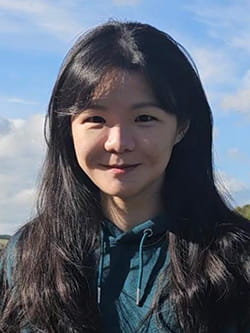
Elsie Hu
Elsie is a PhD candidate in Sustainable Finance at the University of Edinburgh Business School.
Her research has a strong interdisciplinary focus on sustainable finance, computational linguistics, and corporate accountability, with a strong primary emphasis on fine-tuning large language models.
Her work spans two strands: how policy and regulatory shocks shape corporate green claims, and how corporate performance shapes nature-related facts such as deforestation.

Johnny Myung Won Lee
My name is Johnny Myung Won Lee and I am a PhD student at the University of Edinburgh under the supervision of Prof Miguel de Carvalho and Dr Daniel Paulin. I am affiliated with the School of Mathematics, Maxwell Institute for Mathematical Sciences and Edinburgh Centre for Financial Innovations. My research is currently fully funded by the School of Mathematics PhD Studentships.
My primary research interests lie in the field of Bayesian statistics, Bayesian regularisation, extreme value theory and Kolmogorov-Arnold neural networks. They share the same goal of utilising the information and discovering insights through data. Currently, I am developing regression frameworks for heavy-tailed distributions and extremes, incorporating shrinkage priors with applications in financial return modelling. Additionally, I am increasingly passionate about the intersection of statistics and everyday life. This includes applications that draw inspiration from extreme events, finance, natural language processing that use machine learning to accelerate scientific discovery.

Waylon Li
I am currently a PhD student at the Artificial Intelligence Applications Institute at School of Informatics in University of Edinburgh, proud to be supervised by Prof Tiejun Ma.
I finished my Master by Research degree (2021-2022) at the Institute for Language, Cognition and Computation in University of Edinburgh with Prof Shay Cohen and my Bachelors degree at University of Edinburgh as well.
Since the advent of large language models (LLMs), my recent research has primarily focused on applying LLMs and learning-to-rank models in financial applications. I also have experience in fundamental research on deep learning based ranking algorithms, retrieval-augmented generation (RAG), and financial synthetic data generation (SDV). Before LLMs emerged, I researched language model pretraining using mathematical corpora and syntactic parsing.
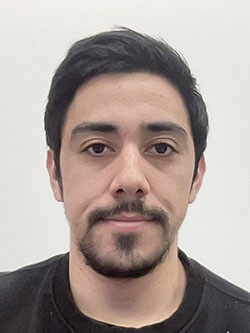
Daniel Saavedra Morales
I am a Mathematical Engineer with an MSc in Computer Science. I am currently a PhD candidate in Statistics at the Pontificia Universidad Católica de Chile and an international visiting student hosted by Professor Miguel de Carvalho. My academic interests include Bayesian methodology, stochastic processes, statistical computing, and emerging applications of deep learning in statistics. I am also passionate about education and the transfer of knowledge.
My research focuses on developing flexible model-selection methods for extreme-value data. I am particularly interested in statistical problems where conventional parametric assumptions may not adequately capture the complex behaviour of rare and extreme observations. To address these challenges, I use Bayesian nonparametric methodology to develop models that can adapt to the underlying structure and nature of the data. My work brings together Bayesian inference, stochastic modelling, and statistical computing, while also exploring how modern deep-learning techniques can contribute to the analysis of complex statistical problems.

Yifan Qi
I am a PhD student in Sustainable Accounting and Finance at the University of Edinburgh Business School, where I also serve as a CircHive and NatWest Group fellow and member of B-CCaS. My research specialises in accounting, financial, and economic empirical analysis of environmental geospatial data, focusing on pollution, biodiversity, circular economy, and climate change.
My methodology centers on quantitative analysis of firm-level data using econometric models, enhanced by data visualisation techniques. I approach financial metrics from the bottom up through accounting while understanding broader economic phenomena through political economy. Geospatial data forms the cornerstone of my research, allowing me to translate environmental insights to the firm level.
Beyond my academic pursuits in sustainable accounting and finance, I'm passionate about singing, dancing, video games, AI, science fiction movies, documentaries, and outdoor activities including swimming, tennis, hiking, and horse riding.
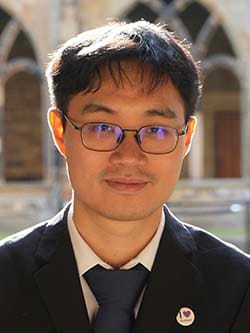
Runzhi Tian
Runzhi is a first-year PhD student in Financial Technology at the University of Edinburgh Business School, supervised by Professor Gbenga Ibikunle and Dr Adam Ntakaris.
His research lies at the intersection of finance, economics, and financial technology, with a particular focus on cryptocurrency markets, decentralised finance, and blockchain-based financial systems.
His current project examines stablecoin fragility by integrating economic theory with empirical methods from microstructure and forensic finance.
In particular, he develops and applies novel approaches to detecting market manipulation, including wash trading, to study how artificial trading activity may affect liquidity, systemic risk, and regulatory oversight in stablecoin markets.
His work aims to contribute to the academic understanding of emerging forms of financial fragility and to inform the design of more effective regulatory mechanisms for digital asset markets.

Ye Wang
I am a Master of Research student at Artificial Intelligence and its Applications Institute, School of Informatics, University of Edinburgh. With a cross-disciplinary background in informatics, finance, and mathematics, my research focuses on fairness in generative AI, decentralised learning, and economic empirical analysis.
My research explores how generative AI, and synthetic data can reshape the foundations of fairness in intelligent systems. Drawing on approaches and perspectives from informatics, finance, and mathematics, I investigate the potential of generative AI in synthetic data generation, with a particular focus on fairness. I am also interested in decentralised learning systems, particularly in how collaboration can emerge without central coordination. A central theme in my work is the design of fairness-aware mechanisms that promote more responsible systems. Through this lens, my work contributes to broader conversations on building machine learning systems that are not only technically robust, but also socially responsive.

William Wu
As a PhD researcher in Statistics at the University of Edinburgh’s School of Mathematics, I explore LLM posterior sampling to refine AI-generated responses. Currently I'm collaborating with Abrdn Quant Team on AI-driven investment strategies. I enjoy solving abstract problems and finding clarity in complexity.
My research focus explores sampling techniques for large language models by extending the classical Metropolis-Hastings algorithm. In this framework, candidate replies are conditionally generated and then selectively accepted or rejected based on prior outputs, forming a Markov chain that progressively refines response quality toward a target distribution aligned with specific objectives such as enhanced creativity or improved politeness.
Additionally, the approach quantifies the semantic characteristics of generated replies by mapping them into a high-dimensional embedding space and evaluating their global similarity. An empirical probability mass function is then derived from these global similarity scores.

Cindy Yang
I am a PhD student in Financial Technology at the University of Edinburgh, fully funded by the University of Edinburgh Business School Doctoral Scholarship. My research explores how heterogeneous trading patterns contribute to systemic risk and the emergence of endogenous price co-jumps—sudden, correlated asset price movements that occur without identifiable external triggers.
My approach integrates theories and techniques from statistical physics, network science, financial market microstructure, and deep learning. Specifically, I use the Multivariate Quadratic Hawkes Process and Temporal Graph Neural Networks to model feedback-driven dynamics in financial markets and to develop predictive, early-warning indicators of endogenous market stress. My work is grounded in high-resolution intraday transaction data, which I use to build temporal multilayer network models that bridge micro-level trading activities with macro-level financial instability.
I’m passionate about uncovering the hidden structure of financial systems and translating complex theoretical models into practical tools for systemic risk monitoring. My goal is to contribute to both academic understanding and the design of tools that help regulators and institutions monitor financial fragility in increasingly algorithmic and fragmented markets.